← Back to Insights
Aclymate Team
June 29, 2026
14 min read
A sustainability team helps a company measure, manage, report, and improve its environmental and social impact while responding to customer, investor, employee, supplier, and regulatory expectations.
For many growing businesses, the sustainability team is responsible for carbon accounting, sustainability strategy, reporting, customer requests, supplier data, certifications, climate goals, emissions reductions, and credible proof of progress.
But not every company needs the same team structure.
A small company may only have two or three people sharing sustainability responsibilities. A mid-size company may have a small dedicated sustainability team. A large enterprise may have a broader team that includes specialists in carbon accounting, ESG reporting, procurement, data, software, compliance, communications, and program management.
The challenge is that most growing businesses need the output of a full sustainability team before they can justify hiring one.
That is where Aclymate One can help. Aclymate One can act as your outsourced sustainability team or extend the team you already have with software, carbon accounting, expert consulting, data support, reporting help, certification guidance, and program management.
A sustainability team is the group of people responsible for managing a company’s sustainability program.
Depending on the company, the team may focus on:
The EPA describes sustainability as creating and maintaining conditions where humans and nature can exist in productive harmony to support present and future generations.
In some companies, sustainability is a formal department. In others, it is a shared responsibility across operations, finance, procurement, HR, legal, marketing, and leadership.
The best sustainability teams bring structure to work that often cuts across the entire business.
Sustainability has become a business requirement for many companies.
A company may need a sustainability team when:
Without a sustainability team, the work often falls to people who already have full-time jobs.
Finance may be asked for spend data. Operations may be asked for energy data. Procurement may be asked for supplier information. Sales may need customer-ready proof. Marketing may want to communicate progress. Leadership may want a strategy.
A sustainability team helps coordinate those needs and turn scattered activity into a managed program.
The exact roles depend on company size, industry, reporting needs, and sustainability maturity.
A complete sustainability team may include some or all of the following roles.
The sustainability leader owns the overall direction of the program.
This role may be responsible for:
In smaller companies, this role may be part-time or owned by an executive, operations leader, marketing leader, or finance leader.
A sustainability manager turns strategy into action.
This role may manage:
The sustainability manager is often the person who keeps the program moving day to day.
A sustainability program manager helps manage the operating rhythm of the sustainability program.
This role is especially important when sustainability work includes many owners, deadlines, reports, requests, and initiatives.
A program manager may help with:
For growing companies, program management can be the difference between a sustainability plan that sits in a document and one that actually gets done.
A carbon accountant measures and manages greenhouse gas emissions.
This role may be responsible for:
The GHG Protocol Corporate Standard provides requirements and guidance for companies and other organizations preparing a greenhouse gas emissions inventory.
Carbon accounting is often the foundation of the sustainability program because customers, reporting frameworks, and certifications increasingly ask for emissions data.
A sustainability consultant helps guide the broader sustainability program.
This role may support:
A sustainability consultant can help companies decide what to prioritize and how to communicate progress credibly.
A climate consultant focuses more specifically on emissions, climate strategy, climate risks, climate goals, and emissions reduction planning.
This role may support:
A sustainability data analyst helps collect, clean, connect, and analyze sustainability data.
This role is becoming more important as sustainability reporting depends on data from finance, procurement, utilities, suppliers, travel systems, logistics providers, HR systems, and carbon accounting platforms.
A sustainability data analyst may help with:
The GRI Standards help organizations report on their impacts on the economy, environment, and people in a comparable and credible way. Strong reporting often depends on well-organized, repeatable data.
For companies with more complex operations, the data analyst role is critical because sustainability work depends on accurate, organized, and repeatable data.
Large companies may need software engineers or data integration specialists to connect sustainability data across systems.
This role may support:
This is especially common in larger enterprise sustainability teams where data volumes are high and manual spreadsheets are no longer practical.
At this size, sustainability becomes both a reporting challenge and a data infrastructure challenge.
A reporting specialist helps prepare sustainability reports, ESG disclosures, customer responses, and third-party assessment materials.
This role may support:
CDP describes itself as the world’s independent environmental disclosure system and provides a corporate question bank for companies disclosing environmental information: CDP Question Bank.
A supplier sustainability lead focuses on supplier data, Scope 3 emissions, and sustainable procurement.
This role may help with:
CDP’s Supplier Engagement Assessment evaluates corporate supply chain engagement on climate issues based on information reported in a company’s CDP response: CDP Supplier Engagement Assessment.
Sustainability work needs to be communicated carefully.
This role may support:
This matters because sustainability claims need to be clear, specific, and supported by data.
A small sustainability team may have two or three people, often with shared responsibilities.
This is common at growing businesses that are starting to receive customer requests, but do not yet have a full sustainability department.
A small team might include:
| Role | What They Do |
|---|---|
| Executive Sponsor | Sets priorities and connects sustainability to business goals |
| Sustainability Manager or Owner | Coordinates requests, reporting, vendors, and internal data collection |
| Carbon Accounting / Data Support | Helps collect emissions data, calculate the footprint, and prepare reports |
In many small companies, these roles are not full-time. The sustainability owner may also work in operations, marketing, finance, procurement, or leadership.
Small teams often struggle with:
For small teams, Aclymate One can act as the sustainability team.
Aclymate One gives your company access to software, Carbon Bookkeepers, Sustainability Consultants, and Program Managers who can help measure emissions, organize data, prepare reports, respond to customer requests, and manage next steps.
Instead of hiring multiple people, a small company can use Aclymate One to get the core capabilities of a sustainability department in one plan.
A mid-size sustainability team may have three to five people.
This is common when sustainability has become more important to sales, reporting, customers, and operations.
A mid-size team might include:
| Role | What They Do |
|---|---|
| Sustainability Director or Manager | Owns strategy, goals, reporting, and cross-functional alignment |
| Carbon Accountant | Measures Scope 1, 2, and 3 emissions and manages carbon data |
| Program Manager | Tracks initiatives, owners, deadlines, and customer requests |
| Supplier / Procurement Sustainability Lead | Manages supplier data, Scope 3, and procurement-related sustainability work |
| Reporting / Certification Specialist | Supports CDP, EcoVadis, reports, claims, and customer proof |
Mid-size teams often have more structure, but still face capacity issues.
They may struggle with:
For mid-size teams, Aclymate One can extend the sustainability team.
If your team already has a sustainability manager or director, Aclymate One can add carbon accounting, data support, reporting help, certification guidance, and program management capacity.
This helps the internal team focus on strategy, leadership alignment, and business priorities while Aclymate helps with the execution layer.
Aclymate One can support:
A large enterprise sustainability team often has more than five people and may include specialized roles across sustainability, data, procurement, reporting, compliance, and technology.
A large team might include:
| Role | What They Do |
|---|---|
| Chief Sustainability Officer | Owns enterprise sustainability vision, governance, and executive strategy |
| Sustainability Directors | Lead climate, reporting, supplier, operations, or regional programs |
| Carbon Accounting Team | Measures emissions and manages carbon accounting methodology |
| ESG Reporting Team | Manages disclosures, reports, ratings, and stakeholder communications |
| Supplier Sustainability Team | Engages vendors and manages supply chain sustainability data |
| Sustainability Data Analysts | Clean, analyze, and validate sustainability data |
| Software Engineers / Integration Specialists | Connect ERP, procurement, utility, travel, supplier, and reporting systems |
| Program Managers | Track initiatives, owners, deadlines, progress, and reporting workflows |
| Legal / Compliance Support | Reviews claims, disclosures, and regulatory requirements |
| Communications Team | Supports internal and external sustainability messaging |
In large companies, sustainability data may come from many systems:
At this size, sustainability is not just a consulting problem. It is also a data integration and data quality problem.
Large enterprise teams may need software engineers and data analysts to build integrations, clean data, map categories, check quality, and support repeatable reporting.
For larger companies, Aclymate One can extend the team by providing specialized carbon accounting, reporting, supplier data, documentation, and program management support.
Aclymate One may help enterprise teams:
For enterprise teams, Aclymate One may not replace the full internal sustainability department, but it can provide flexible support where the team needs more execution capacity.
A sustainability consultant typically provides advisory support, strategy, or project-based help.
A sustainability team owns the ongoing work.
A consultant may help answer:
“What should we do?”
A sustainability team helps answer:
“What needs to happen, who owns it, what data is needed, what proof do we need, and how do we keep the program moving?”
Many companies need both consultant expertise and team execution.
That is why Aclymate One combines expert consulting with program management and software.
A climate consultant usually focuses on emissions, climate strategy, climate risks, and climate reporting.
A sustainability team may include climate consulting, but it also manages the broader operating system for sustainability.
That can include:
A climate consultant can help with specific climate questions. A sustainability team helps keep the full program running.
A carbon accounting consultant helps measure and report greenhouse gas emissions.
A sustainability team uses that emissions data as part of a broader program.
Carbon accounting may answer:
“What are our emissions?”
A sustainability team also asks:
Yes. Aclymate One can either serve as your outsourced sustainability team or extend the team you already have.
For companies without a sustainability team, Aclymate One can provide the core roles needed to manage the work:
For companies with an existing team, Aclymate One can add capacity and expertise where the team needs help.
Aclymate One can support the full sustainability lifecycle:
Aclymate One gives growing companies access to the people, platform, and process needed to manage sustainability with confidence.
CTA: See Aclymate One
The right sustainability team depends on your company’s size, complexity, customer pressure, and reporting needs.
Most companies do not need to build the entire team on day one. They need the right support for their current stage and a path to grow.
Aclymate helps companies build sustainability capacity without overbuilding an internal department too early.
With Aclymate One, you can get software plus expert support from the roles most companies need:
Aclymate One can serve as your sustainability team, extend your existing team, or help your company bridge the gap until you are ready to hire internally.
Instead of trying to manage sustainability with scattered spreadsheets, disconnected consultants, and overloaded internal teams, Aclymate gives you a practical way to measure, plan, manage, report, and certify progress.
CTA: See Aclymate OneSecondary CTA: Talk to an Expert
Aclymate One gives growing businesses access to the software, experts, and program management needed to run a sustainability program with confidence.
Use Aclymate One as your sustainability team or as an extension of the team you already have.
See Aclymate OneTalk to an Expert
A sustainability team manages a company’s sustainability program. This can include carbon accounting, sustainability strategy, reporting, customer requests, supplier data, certifications, CDP, EcoVadis, climate goals, emissions reductions, and program management.
A sustainability team may include a sustainability leader, sustainability manager, program manager, carbon accountant, sustainability consultant, climate consultant, data analyst, reporting specialist, supplier sustainability lead, software engineer, and communications or claims support.
A small company may have two or three people sharing sustainability responsibilities. A mid-size company may have three to five people. A large enterprise may have more than five specialized roles, including data analysts and software engineers for integration and data quality.
Many sustainability teams need carbon accounting support because emissions data is often required for customer requests, reporting, certifications, and climate strategy.
A program manager is valuable because sustainability work involves many tasks, owners, deadlines, reports, customer requests, and initiatives. Program management helps keep the work moving.
As sustainability data becomes more complex, many teams need data support. A data analyst can help collect, clean, map, validate, and analyze data from finance, procurement, utility, supplier, travel, logistics, and carbon accounting systems.
Large enterprise teams may need software engineers or integration specialists to connect sustainability data across ERP, procurement, utility, supplier, HR, travel, and reporting systems.
For some companies, yes. Aclymate One can serve as the outsourced sustainability team by providing software, Carbon Bookkeepers, Sustainability Consultants, Program Managers, reporting support, certification support, and data support.
Yes. Aclymate One can extend an existing sustainability team by adding carbon accounting, reporting, data, certification, customer request, and program management support.
Get Aclymate's practical sustainability content delivered weekly.
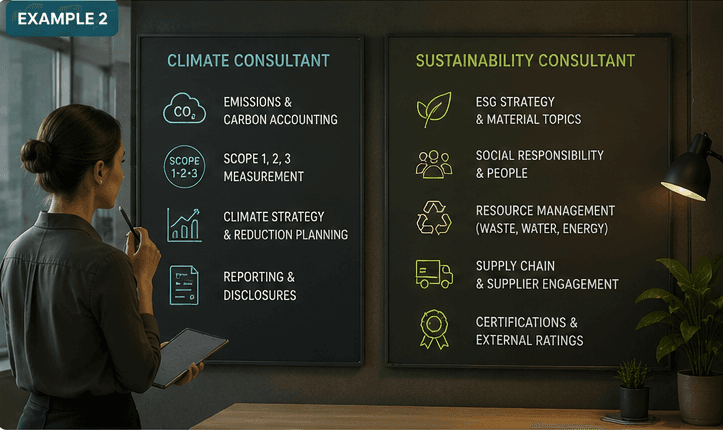
Understand the difference between climate consultants and sustainability consultants, what each one does, and which type of expert your business may need.
Read Article
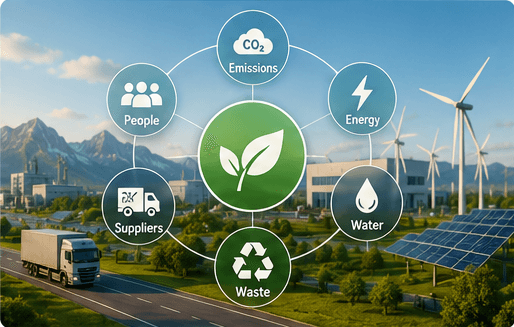
Learn the signs your business may need a climate consultant, from customer requests and Scope 3 emissions to reporting, certifications, and sustainability strategy.
Read Article
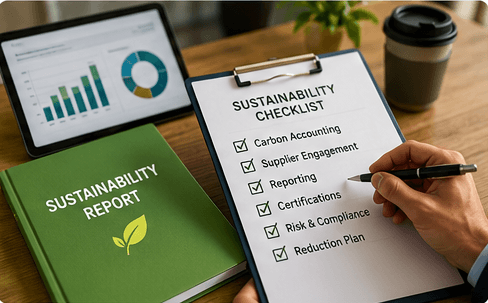
Learn what a CDP consultant does, what support businesses need for CDP reporting, and how Aclymate helps with emissions data, climate strategy, and documentation.
Read Article
Talk with a Sustainability Expert, see a demo, or start free to put the Aclymate platform and experts to work for your team.