← Back to Insights
Aclymate Team
June 29, 2026
11 min read
A Scope 3 consultant helps companies measure, manage, and improve indirect emissions across their value chain, especially emissions connected to suppliers, purchased goods and services, transportation, business travel, waste, products, and other activities outside the company’s direct control.
For many businesses, Scope 3 becomes important when a customer asks for emissions data, a supplier questionnaire includes sustainability questions, an RFP asks for climate information, or a reporting framework requires value chain emissions.
That can be difficult because Scope 3 data often sits outside the company.
Suppliers may not have emissions data. Purchasing data may be incomplete. Spend categories may not map cleanly to emissions categories. Logistics data may live with a shipping provider. Product data may live with suppliers. Business travel, waste, packaging, and materials data may be spread across multiple teams.
A Scope 3 consultant helps organize that complexity.
They help identify which Scope 3 categories matter, what data is available, what data is missing, what assumptions are reasonable, and how to improve supplier data over time.
Scope 3 emissions are indirect greenhouse gas emissions that occur across a company’s value chain.
They are not direct emissions from company-owned or controlled sources. They are also not emissions from purchased electricity, steam, heat, or cooling. Instead, they come from upstream and downstream business activities connected to suppliers, customers, products, transportation, purchasing, travel, waste, and other value chain activity.
The GHG Protocol Corporate Value Chain Scope 3 Standard provides a methodology companies can use to account for and report Scope 3 emissions across sectors and geographies.
Scope 3 categories may include:
For many companies, Scope 3 emissions represent the largest part of the carbon footprint.
The EPA explains that Scope 3 emissions include sources not within an organization’s Scope 1 and Scope 2 boundary and are also referred to as value chain emissions: EPA Scope 3 Inventory Guidance.
A Scope 3 consultant helps companies measure and manage value chain emissions.
This may include:
A Scope 3 consultant helps turn messy value chain data into a usable emissions picture.
The goal is not to create perfect data on day one. The goal is to create a credible starting point, document assumptions, identify gaps, and improve data quality over time.
Scope 3 is difficult because it often depends on data the company does not directly control.
A company may need information from:
A company may also need to make decisions about methodology.
For example:
This is why Scope 3 is not only a carbon accounting issue. It is also a data, procurement, supplier engagement, and program management issue.
Supplier data matters because suppliers often drive a large share of a company’s Scope 3 emissions.
For many companies, purchased goods and services, materials, packaging, logistics, and supplier operations can be major emissions sources.
Supplier data may help companies:
The EPA provides a supplier questionnaire on energy and greenhouse gas emissions that organizations can use as a starting point to collect emissions-specific information from suppliers and engage them on measuring and reducing emissions.
A Scope 3 consultant can help decide what to ask suppliers, how to interpret responses, and how to use supplier data in a broader emissions inventory.
Supplier data collection can feel overwhelming if a company tries to ask every supplier for everything at once.
A Scope 3 consultant helps prioritize the process.
Not every supplier has the same emissions impact.
A Scope 3 consultant can help identify which suppliers matter most based on:
This helps companies focus effort where it matters most.
For example, a company may choose to start with high-spend suppliers, high-emissions categories, critical materials, or suppliers connected to major customer requests.
The goal is to create a practical supplier engagement plan instead of a generic supplier survey.
A Scope 3 consultant can help decide what information to request from suppliers.
Supplier data requests may include:
The request should match the supplier’s maturity and the company’s reporting needs.
Some suppliers may have detailed emissions data. Others may have basic sustainability policies. Some may have nothing yet.
A Scope 3 consultant helps create a phased approach that improves data quality over time.
Supplier engagement often requires a repeatable process.
A Scope 3 consultant may help create:
CDP’s supply chain guidance explains that its supply chain module is used by companies responding to CDP at the request of one or more customer members of CDP’s supply chain program: CDP Supply Chain Guidance.
A consultant can help align supplier questionnaires with customer expectations, reporting needs, and available data.
Most companies do not have perfect supplier emissions data at the beginning.
A Scope 3 consultant can help use reasonable estimates when supplier data is missing.
This may include:
The important thing is to document the method, explain assumptions, and improve over time.
A strong Scope 3 process does not require perfect data immediately. It requires transparency, consistency, and a plan for improvement.
Scope 3 work should improve each year.
A Scope 3 consultant can help companies move from rough estimates to better data by:
The SBTi supplier engagement guidance highlights the importance of engaging supply chains to support decarbonization and science-based targets.
A consultant helps create a practical path from “we do not have great data” to “we are improving data quality and supplier engagement over time.”
Scope 3 supplier data is often needed because customers ask for it.
A customer may ask:
A Scope 3 consultant helps companies translate supplier data into customer-ready proof.
This may include:
The goal is to help the company answer customer questions with more confidence and consistency.
A carbon accounting consultant helps measure and report greenhouse gas emissions.
A Scope 3 consultant focuses specifically on value chain emissions, supplier data, purchasing, logistics, and indirect emissions outside the company’s direct control.
The roles often overlap.
A carbon accounting consultant may calculate Scope 1, Scope 2, and Scope 3 emissions as part of a full carbon footprint. A Scope 3 consultant may go deeper into supplier engagement, Scope 3 category mapping, data quality, procurement workflows, and customer requests.
A simple way to think about it:
A carbon accounting consultant helps answer: “What are our emissions?”
A Scope 3 consultant helps answer: “What are our value chain emissions, which suppliers matter most, and how do we improve the data?”
A sustainability consultant helps with broader sustainability strategy, reporting, policies, certifications, customer requests, and program management.
A Scope 3 consultant focuses specifically on value chain emissions and supplier data.
The two roles may overlap when supplier data is needed for sustainability reporting, EcoVadis, CDP, customer questionnaires, RFPs, or procurement programs.
A sustainability consultant may help define the broader supplier sustainability strategy.
A Scope 3 consultant may help calculate the emissions, structure data requests, and improve value chain emissions reporting.
A climate consultant helps companies manage greenhouse gas emissions, climate strategy, reduction planning, and climate-related reporting.
A Scope 3 consultant focuses on one of the most difficult parts of climate work: indirect value chain emissions.
A climate consultant may help with the full climate roadmap.
A Scope 3 consultant may focus on supplier data, Scope 3 categories, estimation methods, and value chain reporting.
Many companies need both climate consulting and Scope 3 support.
A business may need a Scope 3 consultant when value chain emissions become important but the company does not have the internal expertise or data to manage them.
Common signs include:
If Scope 3 is affecting sales, reporting, procurement, or customer trust, it may be time to get expert support.
Scope 3 data can support many sustainability assessments and customer requests.
For CDP, companies may need to disclose Scope 3 categories, supplier engagement, emissions targets, and value chain strategy.
For EcoVadis, companies may need to provide evidence related to environmental management, emissions, supplier practices, and sustainable procurement.
For customer questionnaires and RFPs, companies may need to explain whether they measure Scope 3 emissions and how they engage suppliers.
A Scope 3 consultant can help organize the data and documentation needed for these requests.
This may include:
Aclymate helps growing businesses measure Scope 3 emissions, collect supplier information, respond to customer requests, and improve sustainability reporting over time.
Instead of trying to manage Scope 3 with spreadsheets and scattered emails, Aclymate helps companies organize data, workflows, documentation, and expert support in one place.
With Aclymate, companies can get help with:
Aclymate One can serve as your sustainability team or extend the team you already have with Carbon Bookkeepers, Sustainability Consultants, Program Managers, and data support.
CTA: Get Scope 3 SupportSecondary CTA: See Aclymate One
Aclymate helps growing businesses measure Scope 3 emissions, collect supplier information, respond to customer requests, and build credible sustainability proof.
Get software, expert support, and hands-on help in one solution.
Get Scope 3 SupportSee Aclymate One
A Scope 3 consultant helps companies measure and manage value chain emissions. This can include supplier data collection, Scope 3 category mapping, emissions calculations, data quality improvement, supplier questionnaires, reporting, and customer request support.
Scope 3 emissions are indirect greenhouse gas emissions across a company’s value chain. They may include purchased goods and services, suppliers, transportation, business travel, employee commuting, waste, product use, and end-of-life treatment.
Scope 3 emissions are hard to measure because the data often comes from suppliers, vendors, logistics providers, customers, employees, and other sources outside the company’s direct control.
Supplier data may include company-level emissions, product-level emissions, energy use, renewable energy use, emissions reduction targets, sustainability reports, CDP responses, EcoVadis scorecards, certifications, and methodology details.
Yes. A Scope 3 consultant can help create supplier questionnaires, prioritize suppliers, review responses, identify gaps, and use supplier data in carbon accounting and customer reporting.
A carbon accounting consultant helps calculate greenhouse gas emissions across the company. A Scope 3 consultant focuses specifically on indirect value chain emissions, supplier data, purchasing, logistics, and Scope 3 methodology.
Yes. Companies often use estimates when supplier data is missing. A consultant can help use reasonable methods, document assumptions, and create a plan to improve data quality over time.
Yes. Aclymate helps companies measure Scope 3 emissions, collect supplier data, organize sustainability information, respond to customer requests, and improve reporting over time.
Get Aclymate's practical sustainability content delivered weekly.
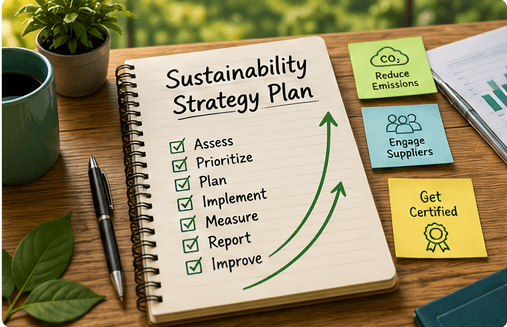
Learn what a carbon accounting consultant does, how they measure Scope 1, 2, and 3 emissions, and when your business may need carbon accounting support.
Read Article
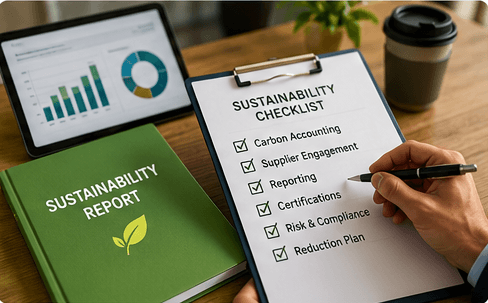
Learn what a CDP consultant does, what support businesses need for CDP reporting, and how Aclymate helps with emissions data, climate strategy, and documentation.
Read Article
Learn what climate consultants cost, what affects pricing, and how to compare consulting, carbon accounting software, and a combined solution like Aclymate.
Read Article
Talk with a Sustainability Expert, see a demo, or start free to put the Aclymate platform and experts to work for your team.