← Back to Teaching Sustainability
Mike Smith
July 20, 2026
Welcome to Teaching Sustainability, the 20-week series from Aclymate created to help small and mid-sized business leaders understand what sustainability means, why it matters, and what to do next. Each week, we cover one practical topic — from carbon accounting and reporting to certifications and climate action — in clear, simple language designed to help you build a more resilient, credible, and competitive business.
Last chapter, we introduced the three-bucket structure of the GHG Protocol: Scope 1, Scope 2, and Scope 3. This chapter zooms in on the first two — the emissions closest to home, and usually the most practical place for a small or mid-sized business to start.
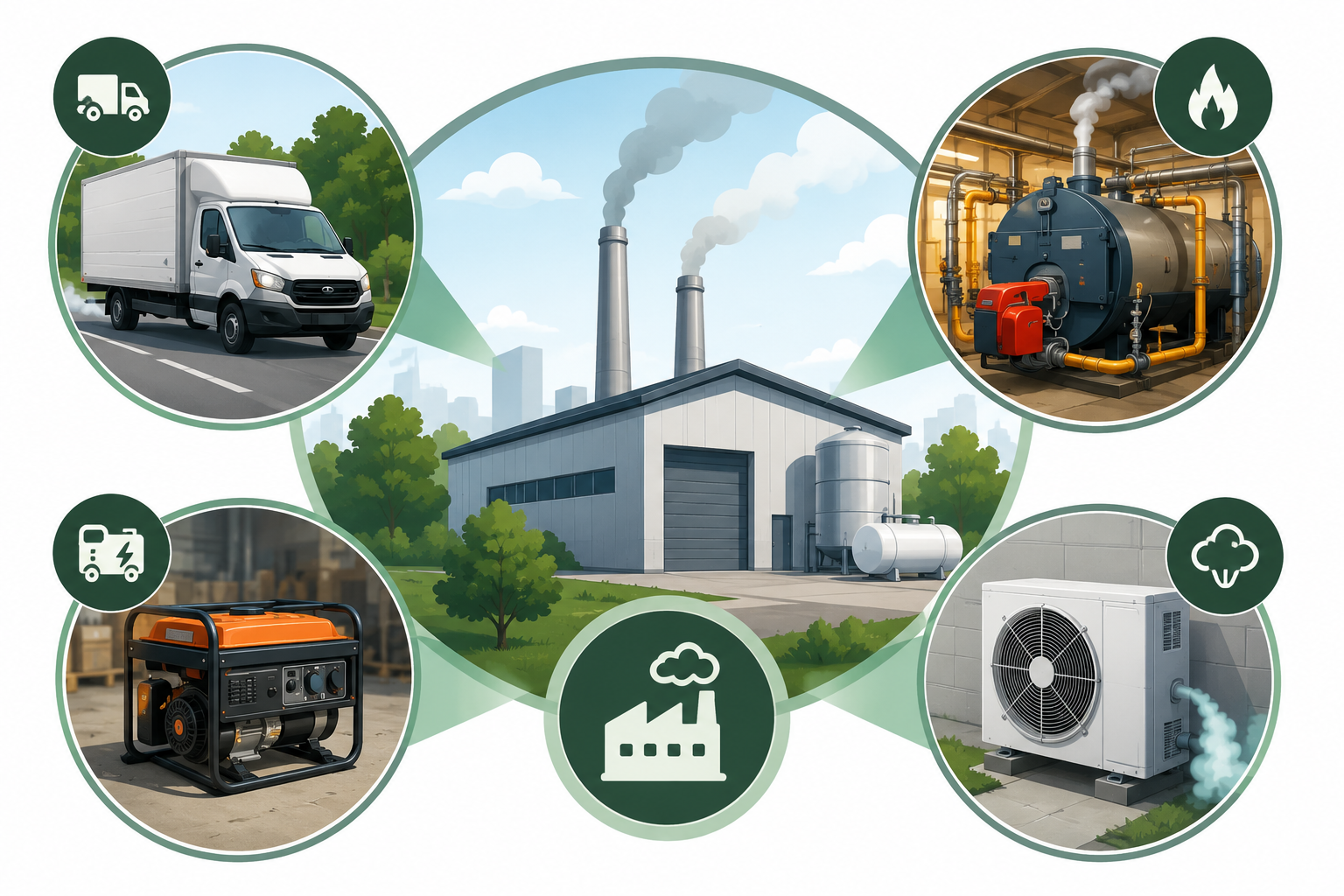
Scope 1 is defined by ownership and control, which means it looks very different from one business to the next. A landscaping company with a fleet of trucks and gas-powered equipment will have a substantial Scope 1 footprint. A ten-person marketing agency renting office space will likely have almost none.
In practice, Scope 1 usually shows up in a few recognizable places:
If your business doesn't operate vehicles, doesn't burn fuel on-site, and doesn't run refrigeration equipment, your Scope 1 emissions may genuinely be close to zero — and that's a legitimate, useful finding, not a gap in your work.
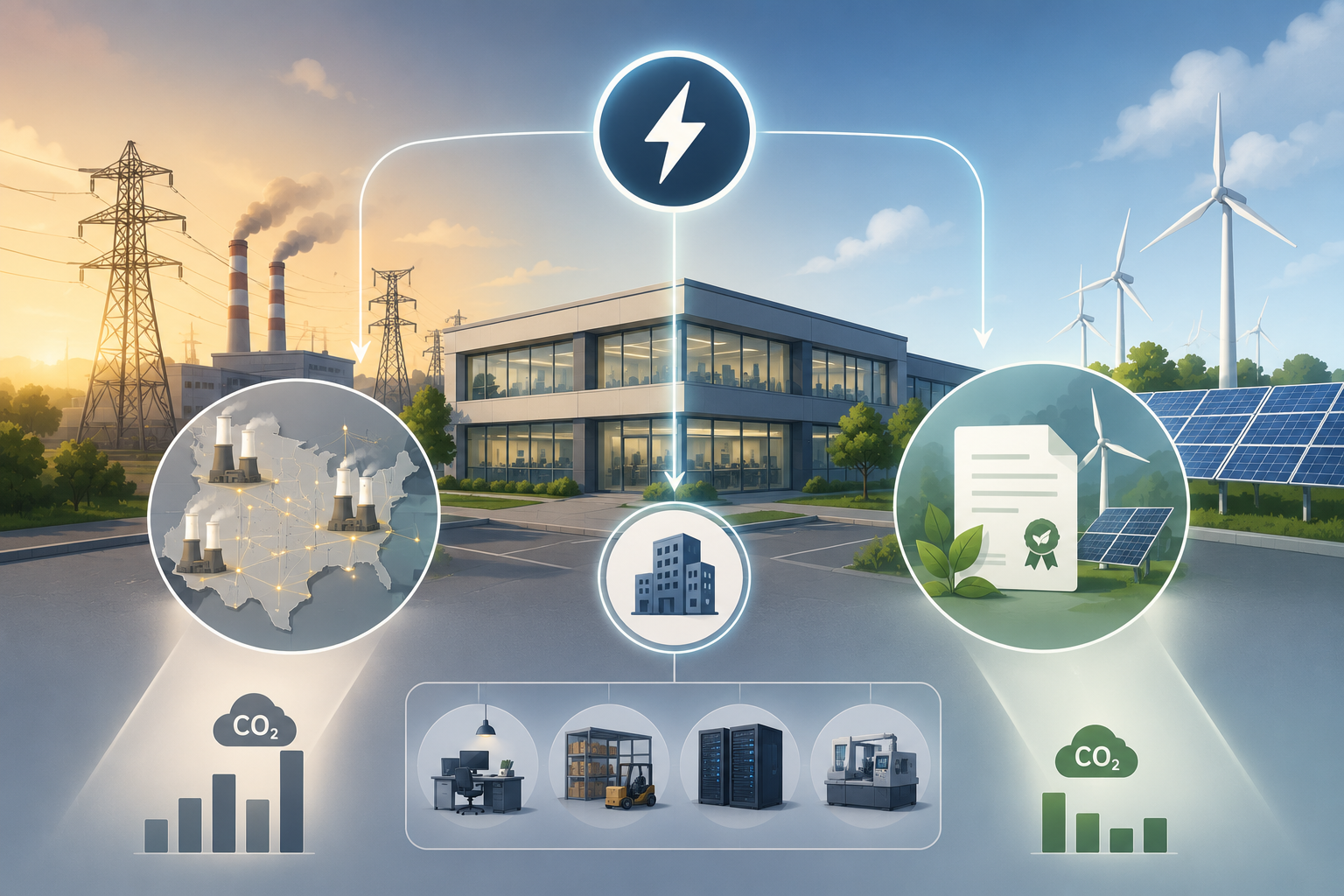
Scope 2 tends to be more universal. Almost every business buys electricity, which means almost every business has some Scope 2 footprint — powering offices, warehouses, retail space, servers, or production equipment. Some facilities also purchase steam, heat, or cooling directly, which falls into the same bucket.
One detail worth understanding early: the GHG Protocol recognizes two ways to calculate Scope 2. The location-based method uses the average emissions intensity of the electricity grid in your area — essentially, what a typical kilowatt-hour looks like where you operate. The market-based method reflects the specific electricity you've contracted for, including any renewable energy certificates (RECs) or clean power purchases. A business that buys RECs might see a very different Scope 2 number under each method, and companies with a meaningful Scope 2 footprint are generally expected to report both.
There's a practical reason Scope 1 and Scope 2 usually come first, and it isn't just tradition. The data is close at hand — utility bills, fuel receipts, and fleet records are things most businesses already have. And the levers for change are directly in your hands: switching a delivery van to electric, upgrading HVAC systems, or signing a green power contract are actions you can take unilaterally, without depending on a supplier or customer to change their behavior. Getting Scope 1 and 2 right also builds the operational habits — data collection, recordkeeping, internal ownership — that make tackling Scope 3 far more manageable later.
A handful of details cause more confusion than they should:
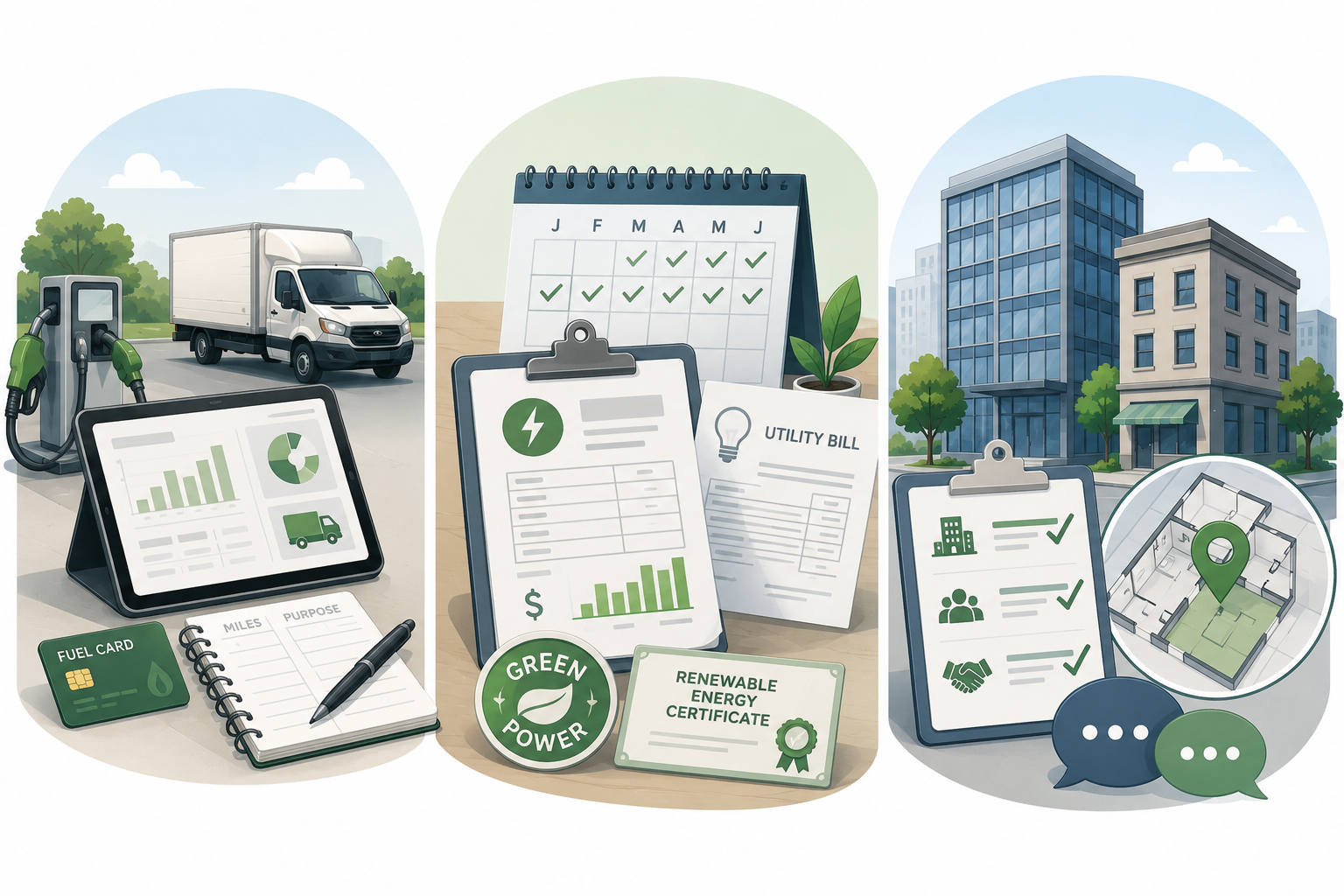
Aclymate connects directly to utility accounts and fuel and expense data to build out Scope 1 and Scope 2 automatically, calculating both location-based and market-based Scope 2 figures where relevant. The platform flags common gaps — like missing refrigerant records — before they become a hole in your inventory. On the Aclymate One tier, your Carbon Bookkeeper helps you set your organizational boundary approach once, correctly, so every future year builds on the same consistent foundation.
Scope 1 and Scope 2 are where most businesses should build their first real inventory — not because they're the biggest source of emissions, but because they're the most controllable, and the most straightforward to measure well. Getting them right is what makes the harder work ahead possible.
Next chapter, we'll take on the bucket most companies find intimidating: Scope 3, and why it usually turns out to be the biggest piece of the puzzle.
Get Aclymate's practical sustainability content delivered weekly.

Measuring your emissions is the foundation. But for many customers, partners, and employees, a third-party certification is what turns your sustainability claims into something they can actually trust.
Read Article

A plain-English guide to the most common reporting frameworks and scorecards companies encounter.
Read Article

How supplier questionnaires, RFPs, large customer requests, and procurement standards are driving the need for credible reporting.
Read Article
Talk with a Sustainability Expert, see a demo, or start free to put the Aclymate platform and experts to work for your team.

