← Back to Mike's Thoughts
Mike Smith
July 15, 2026
Welcome to Teaching Sustainability, the 20-week series from Aclymate created to help small and mid-sized business leaders understand what sustainability means, why it matters, and what to do next. Each week, we cover one practical topic — from carbon accounting and reporting to certifications and climate action — in clear, simple language designed to help you build a more resilient, credible, and competitive business.
Last chapter, we talked about where carbon data actually comes from — utility bills, fuel receipts, expense reports, and the other records your business already keeps. That's the raw material. This chapter is about the filing system: the three-bucket structure that turns a pile of numbers into something you can actually manage.
If you've spent any time around sustainability reporting, you've almost certainly seen the terms Scope 1, Scope 2, and Scope 3. They show up in customer questionnaires, investor requests, certification applications, and now, increasingly, in regulation. They can sound technical, but the idea behind them is straightforward: every emission a business is responsible for gets sorted into one of three buckets, based on how directly the business controls it.
Before the GHG Protocol introduced this structure, there was no consistent way to answer a basic question: whose emissions are these? A ton of CO₂ from a power plant could plausibly belong to the utility that generated it, the manufacturer that used the electricity, or the retailer that sold the manufacturer's product. Without clear rules, the same emissions could get counted by everyone — or by no one.
The three-scope system solves that by assigning emissions based on a business's relationship to the source: what you own and directly control, what you purchase to run your operations, and everything else connected to your business but outside your direct control. It's less about precision for its own sake and more about accountability — making sure emissions get counted once, by the party best positioned to influence them.

Scope 1 covers direct emissions — greenhouse gases released from sources your company owns or operates. If your business burns fuel, this is where it shows up: gasoline or diesel in company vehicles, natural gas in an on-site boiler, propane in a forklift, or refrigerant leaking slowly from an HVAC system. These are emissions happening on your property or in your equipment, under your direct operational control.
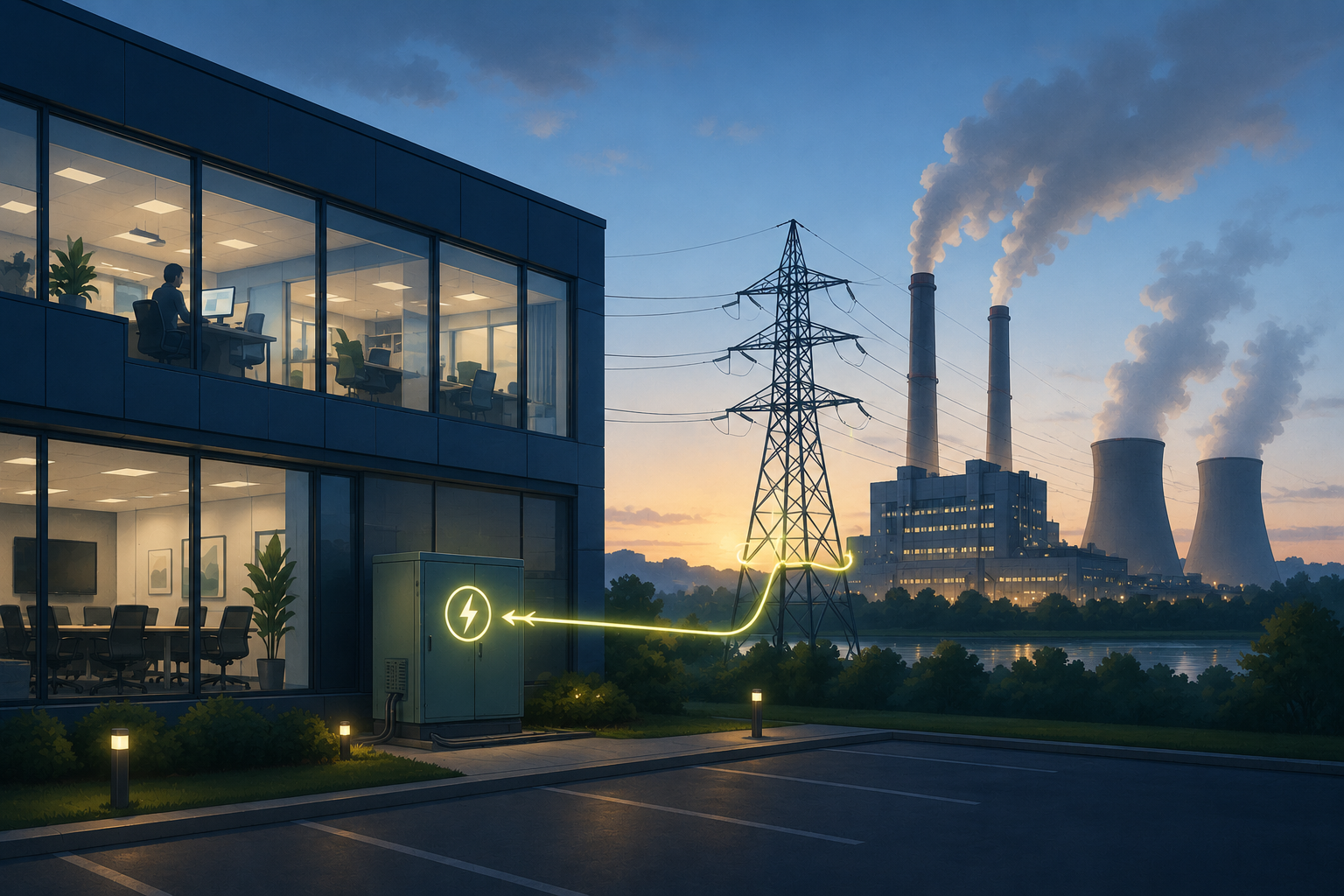
Scope 2 covers indirect emissions from the energy your business purchases — most commonly electricity, but also steam, heat, or cooling in some facilities. You aren't burning anything yourself, but the power plant supplying your electricity is, and the GHG Protocol assigns a share of those emissions to you as the buyer. This is often one of the largest line items for office-based and retail businesses that don't operate vehicles or heavy equipment.
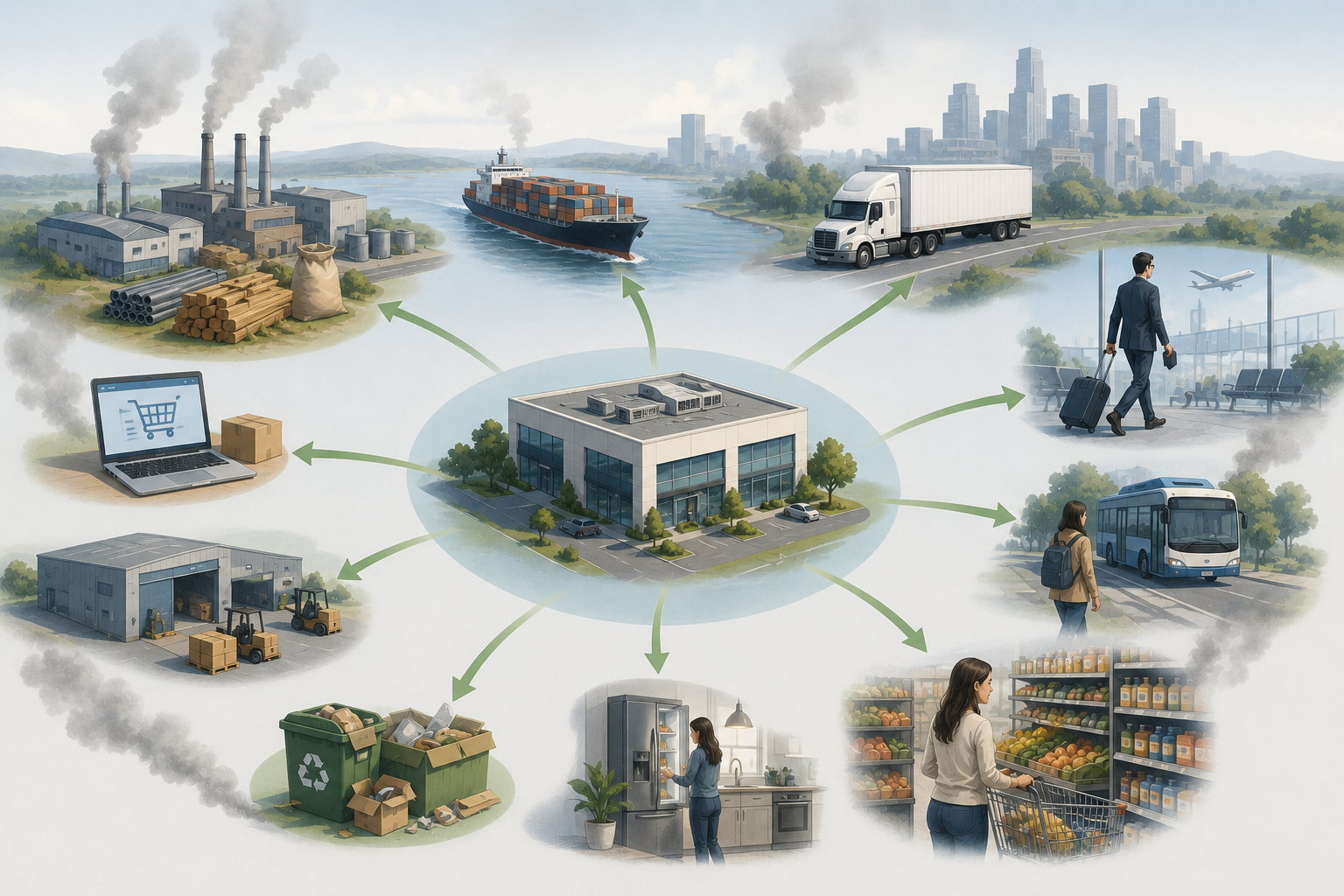
Scope 3 is the broadest bucket, covering indirect emissions across your value chain — both upstream and downstream of your own operations. Purchased goods and materials, third-party shipping and logistics, employee business travel and commuting, and even how customers use and eventually dispose of what you sell all fall here. For most companies, Scope 3 turns out to be the largest bucket by far, frequently representing 70 to 90 percent of total emissions, even though none of it happens inside your own walls.
It would be easy to treat this as an accounting exercise, but the scope structure carries real strategic information. Scope 1 and Scope 2 are where you have the most direct leverage — you can switch fuels, upgrade equipment, or buy cleaner power. Scope 3 requires a different kind of influence — engaging suppliers, rethinking materials, or redesigning products. Knowing which bucket an emission sits in tells you not just how big a number is, but what kind of action could actually reduce it. It's also increasingly the language of external requirements: science-based target frameworks, disclosure regulations, and customer scorecards are almost all organized by scope, not by a single combined total.
Aclymate structures every inventory around the GHG Protocol's Scope 1, 2, and 3 framework from day one, so you're never left guessing which bucket an emission belongs in. As your data connects — utility accounts, fuel and expense records, accounting platforms — the platform automatically sorts it into the right scope and category. On the Aclymate One tier, your Carbon Bookkeeper reviews that categorization and helps you understand what it means for your business, not just what the numbers say.
Scope 1, 2, and 3 aren't just labels required for a report — they're a way of organizing responsibility. They tell you what you directly cause, what you indirectly cause by what you buy, and what you're connected to through everyone else in your value chain. Understanding the three buckets is the first real step toward knowing where to focus.
Next chapter, we'll go deeper into buckets one and two — the emissions closest to home — and look at what they actually look like inside a small or mid-sized business.
Get Aclymate's practical sustainability content delivered weekly.

Measuring your emissions is the foundation. But for many customers, partners, and employees, a third-party certification is what turns your sustainability claims into something they can actually trust.
Read Article

A plain-English guide to the most common reporting frameworks and scorecards companies encounter.
Read Article

How supplier questionnaires, RFPs, large customer requests, and procurement standards are driving the need for credible reporting.
Read Article
Talk with a Sustainability Expert, see a demo, or start free to put the Aclymate platform and experts to work for your team.

