← Back to Insights
Aclymate Team
July 23, 2026
7 min read
Sustainability remains closely connected to the identity of the outdoor industry. Outdoor brands depend on healthy forests, waterways, public lands and communities—and their customers often expect companies to help protect them.
But outdoor retail sustainability is changing.
Broad commitments and ambitious goals are no longer enough. Retailers, regulators, customers and business partners increasingly want measurable emissions, responsible sourcing policies, product information and evidence supporting environmental claims.
The Outdoor Industry Association’s 2025 Sustainability Impact Report shows an industry that remains committed despite economic pressure, tariffs and growing compliance obligations. More than 500 people from 118 companies participated in OIA sustainability programs covering climate, chemistry and compliance.
At the same time, OIA reported that climate progress slipped in 2025, even as participation in its sustainability programs increased 36%. The message for 2026 is clear: companies are not abandoning sustainability, but they need better systems for turning goals into measurable action.
Aclymate CEO Mike Smith will attend Outdoor Retailer 2026, August 19–21 in Minneapolis, to meet with outdoor brands, retailers and manufacturers working through these challenges.
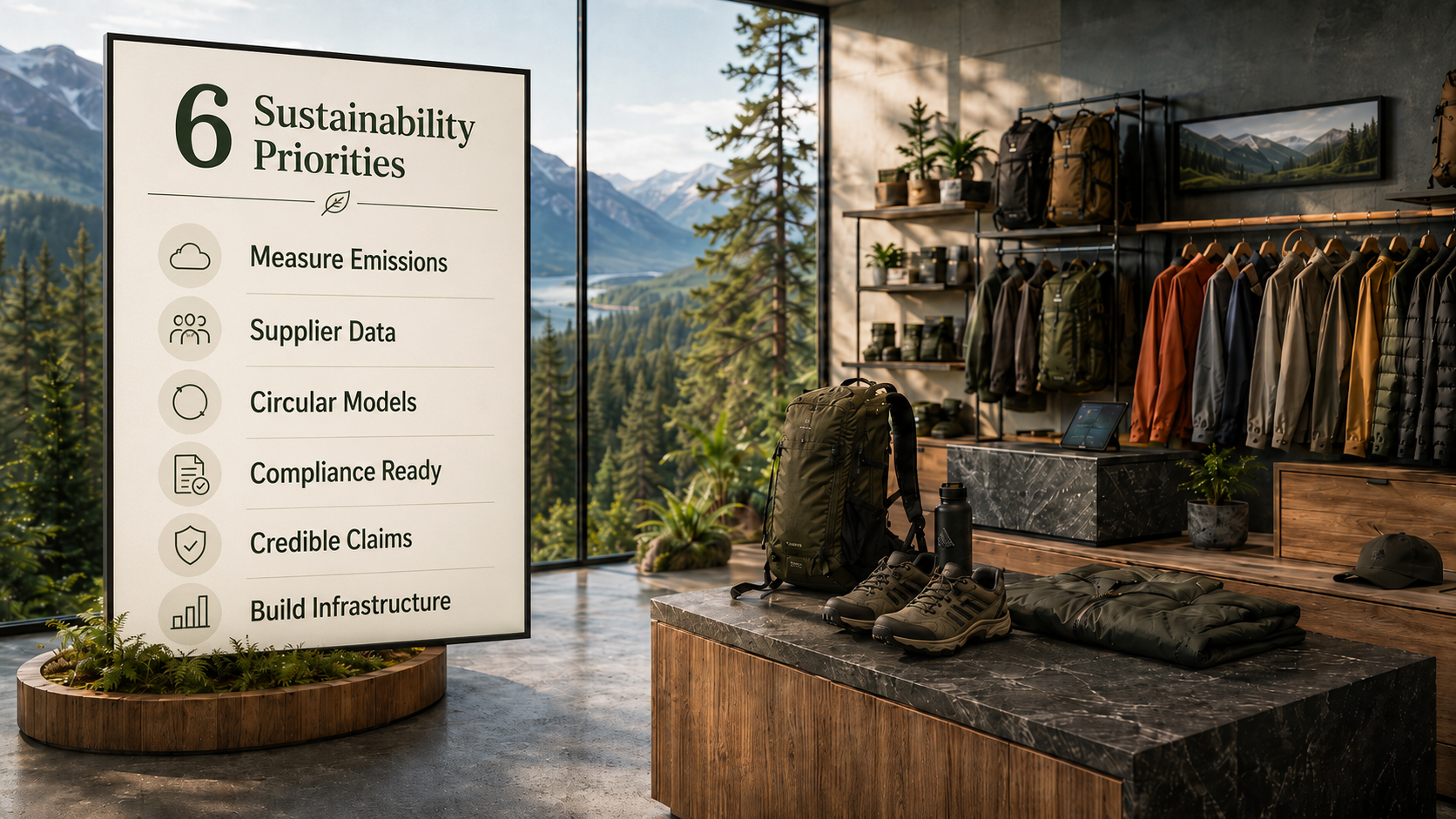
Here are six priorities outdoor companies should focus on in 2026.
A credible sustainability program begins with measurement.
Outdoor retailers and brands should calculate annual Scope 1, Scope 2 and Scope 3 greenhouse-gas emissions.
For many outdoor brands, Scope 3 represents the most difficult part of the footprint because much of the environmental impact occurs within supplier operations rather than company-owned facilities.
Leading outdoor businesses are already doing this work. In OIA’s 2024 Climate Action Corps results, 97% of participating companies had measured or begun measuring Scope 1 and Scope 2, while 90% had measured or begun measuring Scope 3. However, only 59% reported measurable progress toward emissions-reduction targets.
The opportunity in 2026 is to move beyond producing a footprint and begin using the information to make decisions.
Aclymate’s carbon accounting software helps companies measure emissions, identify hotspots and build a repeatable foundation for reporting and reduction planning.
Outdoor retail is heavily dependent on complex global supply chains.
Apparel, footwear and equipment may involve:
Many companies begin Scope 3 accounting with spend-based estimates. These provide a useful baseline, but they do not offer enough detail to evaluate individual materials, factories or products.
Outdoor companies should gradually improve their supplier information by collecting:
The goal is not to send every supplier a large questionnaire immediately. Companies should first identify their highest-impact materials, product categories and suppliers.
They can then focus data-collection efforts where better information will improve decisions.
Aclymate’s guide to carbon accounting for manufacturers and apparel companies explains how supplier, material, manufacturing and transportation data improve emissions reporting.
Supplier transparency is also becoming part of retailer relationships. REI’s current Product Impact Standards expect brand partners to assess sustainability practices, measure greenhouse-gas emissions and establish reduction targets. REI reported that brands representing more than 96% of its annual sales shared sustainability and inclusion information in 2025.
Circularity is becoming an important part of the outdoor retail conversation.
The latest Outdoor Retailer 2026 education agenda includes programming related to re-commerce, repair, rental, waste reduction, product lifecycles and circular business models.
Outdoor companies are exploring:
These initiatives can reduce waste, strengthen customer relationships and create new revenue. But a circular program should not automatically be described as environmentally beneficial.
Companies should measure:
A more durable product may initially require more material or energy but remain useful much longer. A rental program may improve utilization while also increasing shipping and cleaning.
Carbon accounting and lifecycle data help companies understand those trade-offs.
Aclymate’s guide to sustainable fashion practices provides a practical framework for connecting materials, durability, supply chains and reporting.
Sustainability is no longer driven only by voluntary commitments.
Outdoor companies face a growing collection of regulations involving:
OIA’s 2026 sustainability compliance guidance identifies climate disclosure, PFAS restrictions, extended producer responsibility and green marketing as major issues for outdoor businesses.
Not every law applies to every company. Requirements can depend on revenue, location, product category and where products are sold.
However, even companies below regulatory thresholds may be affected indirectly. Large retailers and corporate customers often pass data and compliance requirements down to their suppliers.
Outdoor companies should establish a process for:
This article provides general business information, not legal advice. Companies should consult qualified counsel about requirements that may apply to them.
Outdoor brands have historically used terms such as:
These terms may attract attention, but broad claims can create risk when a company cannot explain or substantiate them.
The Federal Trade Commission’s Green Guides are intended to help companies avoid environmental claims that mislead consumers. The FTC advises marketers to consider how customers will interpret a claim and whether reliable evidence supports it.
A credible environmental claim should be:
For example, “made with 40% recycled polyester” is more specific than “made sustainably.”
Similarly, a carbon-reduction claim should clearly explain:
Sustainability and marketing teams should work together before claims are published—not after a customer, retailer or regulator questions them.
Aclymate’s guide to reporting sustainability and emissions to customers and partners explains how to organize evidence into reusable, customer-ready reporting.
The outdoor industry does not lack environmental commitment. The more common problem is insufficient infrastructure.
Sustainability responsibilities are frequently divided among:
Data may be stored in spreadsheets, accounting systems, supplier portals, utility bills and individual inboxes. When a customer questionnaire or reporting deadline arrives, the company must reconstruct the information.
A scalable sustainability program needs:
The company does not necessarily need a large ESG department. It does need a system that can survive employee changes, increasing customer requests and evolving regulations.
Mike Smith discusses this challenge in Sustainability Without Infrastructure Is Risky. Commitments without data, ownership and repeatable processes can create operational and reputational exposure.
The outdoor sustainability leaders of 2026 will not necessarily be the companies making the boldest promises.
They will be the companies that can:
They will also connect sustainability to business performance.
Lower energy use can reduce costs. Better supplier information can improve resilience. Durable products can strengthen customer loyalty. Credible reporting can improve retailer relationships. Clear ownership can reduce the burden on employees.
Sustainability becomes more valuable when it is integrated into how the business operates rather than treated as a separate initiative.
Aclymate helps companies build the software, data and reporting foundation needed to manage these six priorities.
Aclymate supports outdoor companies with:
Companies can begin with estimates, identify their largest impacts and improve data quality over time without waiting for every supplier or system to be perfect.
Aclymate CEO Mike Smith will attend Outdoor Retailer in Minneapolis from August 19–21.
Mike will be meeting with outdoor retailers, brands, manufacturers and suppliers that want practical help with carbon accounting, supplier data, sustainability reporting, product footprints and retailer requirements.
Contact Aclymate to schedule a conversation with Mike during Outdoor Retailer.
The six main priorities are carbon accounting, supplier and product data, circularity, regulatory compliance, credible environmental claims and repeatable sustainability infrastructure.
Scope 3 includes emissions from materials, manufacturing, packaging, transportation, product use and disposal. These value-chain activities may represent a large portion of an outdoor brand's total footprint.
Requests may include greenhouse-gas emissions, climate targets, sourcing policies, material information, certifications, chemical-management programs and evidence supporting product claims.
PFAS have historically been used in some outdoor products for water, oil and stain resistance. New restrictions and reporting requirements may affect product design, sourcing, testing, labeling and sales. Companies should determine which requirements apply to their products and markets.
Extended producer responsibility, or EPR, makes producers responsible for certain costs or activities associated with collecting, managing, recycling or disposing of products and packaging after use.
No. Circularity focuses on keeping products and materials in use longer through durability, repair, resale, reuse and recycling. Sustainability is broader and can include climate, chemicals, labor, biodiversity, inclusion and governance.
Use specific claims, retain supporting evidence, disclose important qualifications and avoid broad terms that imply more environmental benefit than the company can prove.
Not necessarily. A smaller company needs clear ownership, a repeatable process, reliable software and access to expertise. Some work can be managed internally, while specialized accounting, reporting or certification tasks can be supported by an outside partner.
Aclymate helps outdoor companies calculate emissions, improve supplier data, organize sustainability evidence, track reduction initiatives and prepare credible reports for customers, retailers and other stakeholders.
Get Aclymate's practical sustainability content delivered weekly.
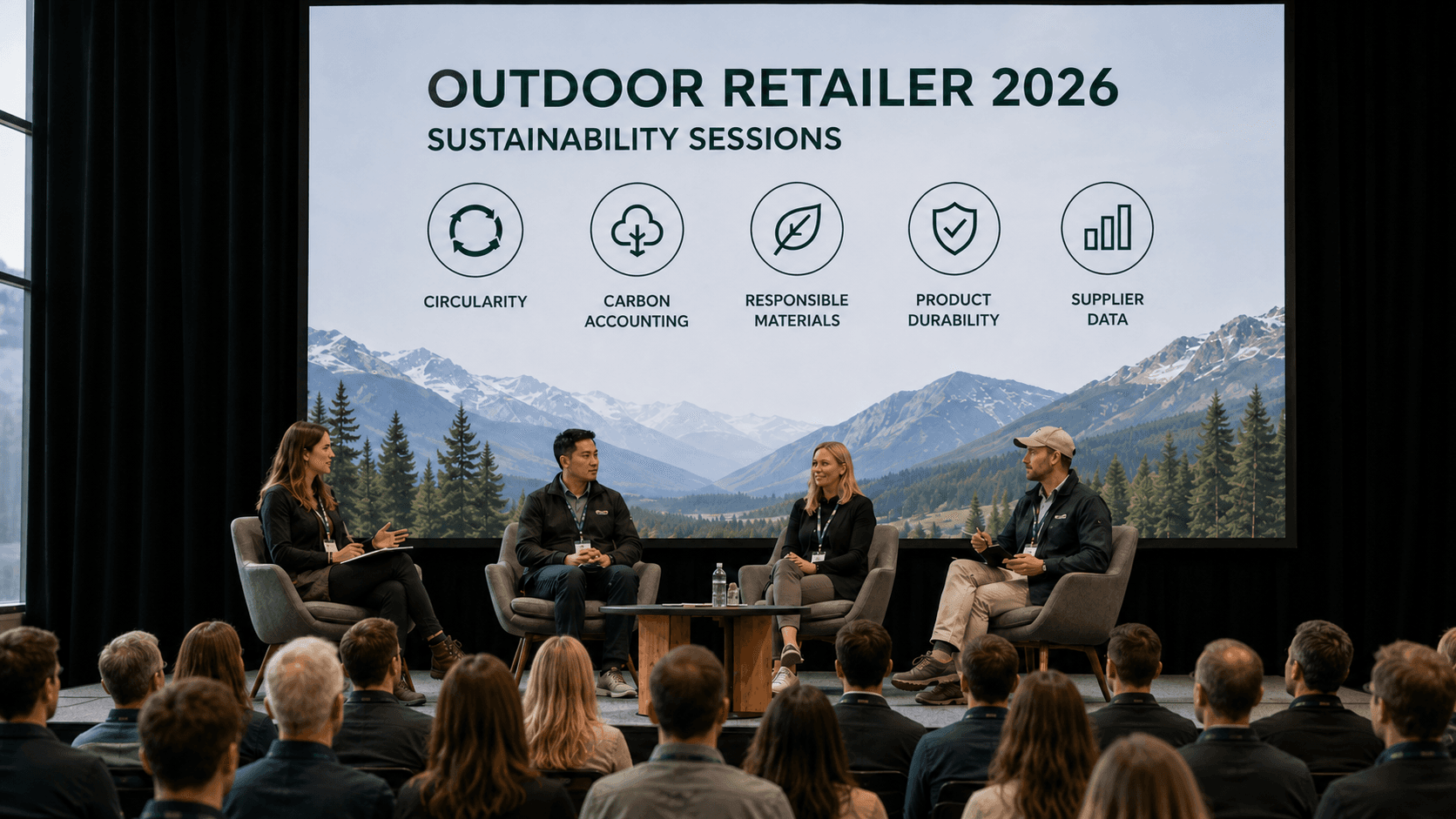
Explore the sustainability, circularity and ESG-related sessions at Outdoor Retailer 2026—and why they matter to outdoor brands and retailers.
Read Article
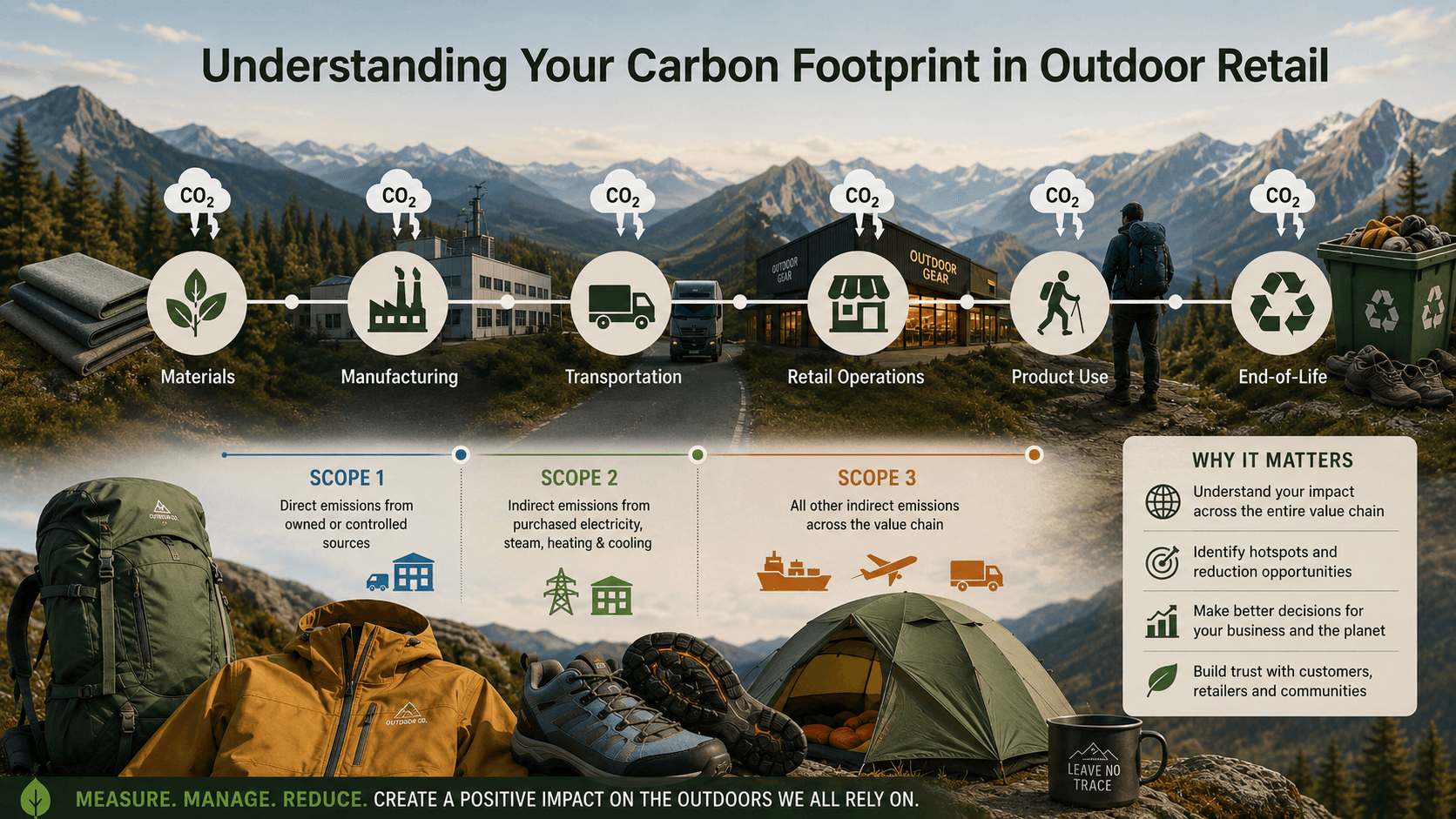
Learn how outdoor retailers and brands can calculate Scope 1, 2 and 3 emissions, improve supplier data and connect carbon accounting to circularity.
Read Article
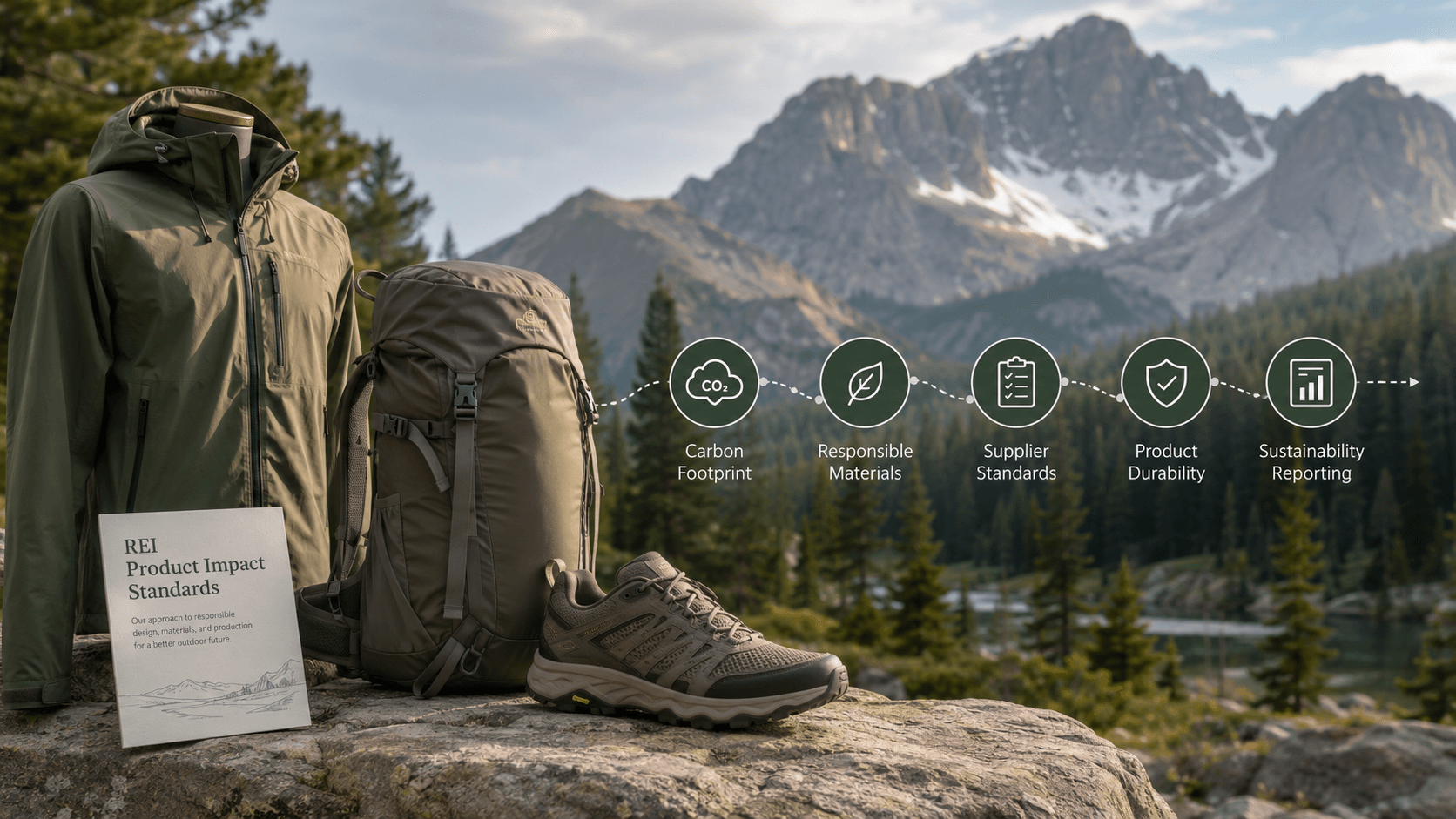
Learn REI sustainability requirements for brands and suppliers, including Product Impact Standards, reporting expectations and partner benefits.
Read Article
Talk with a Sustainability Expert, see a demo, or start free to put the Aclymate platform and experts to work for your team.